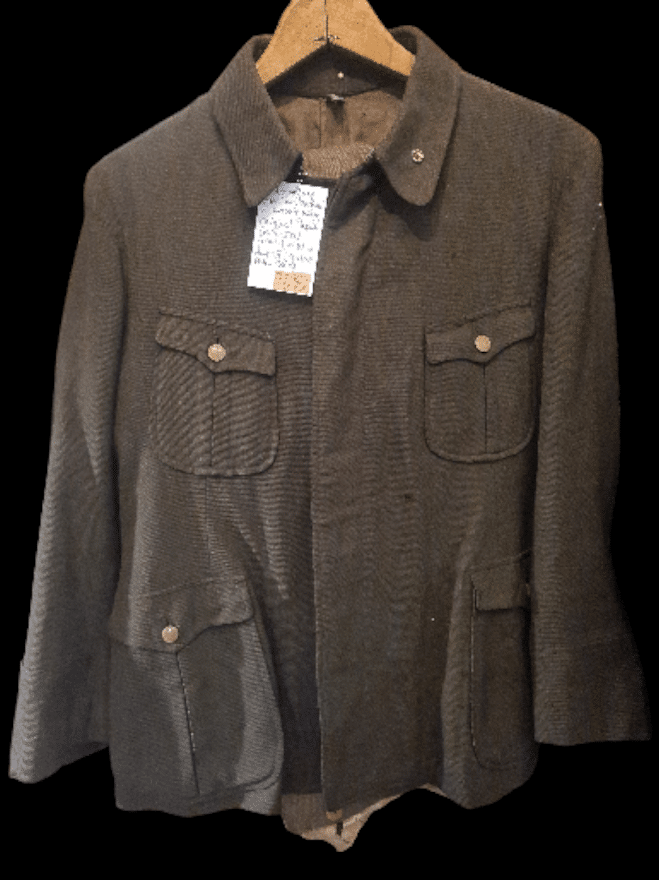
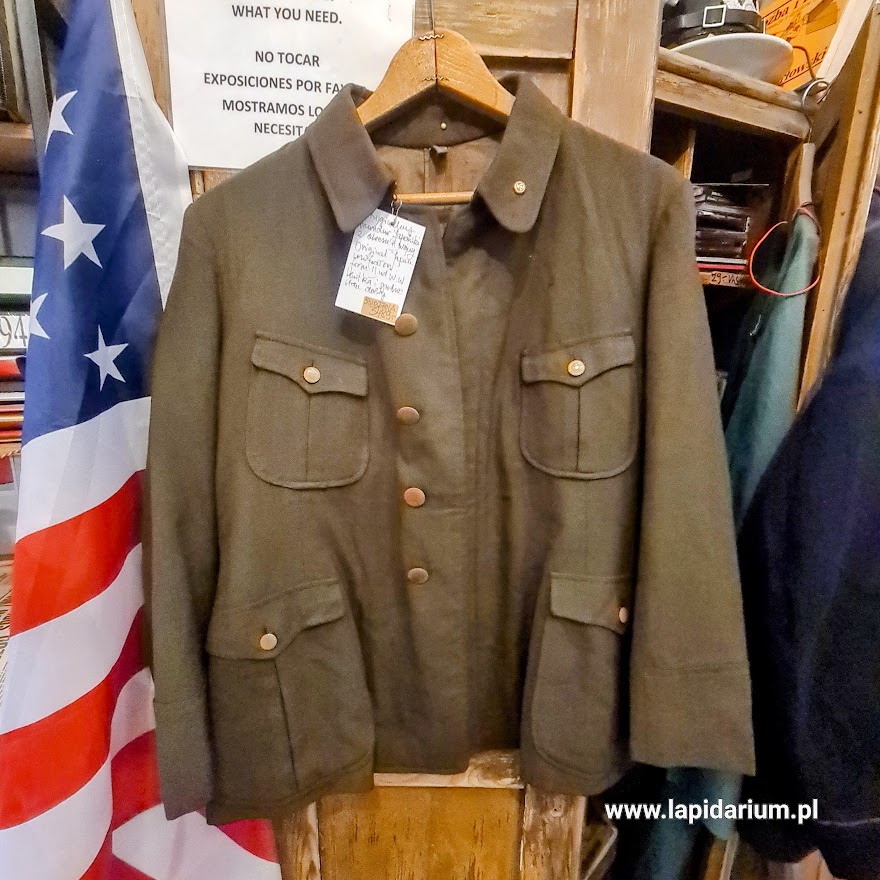
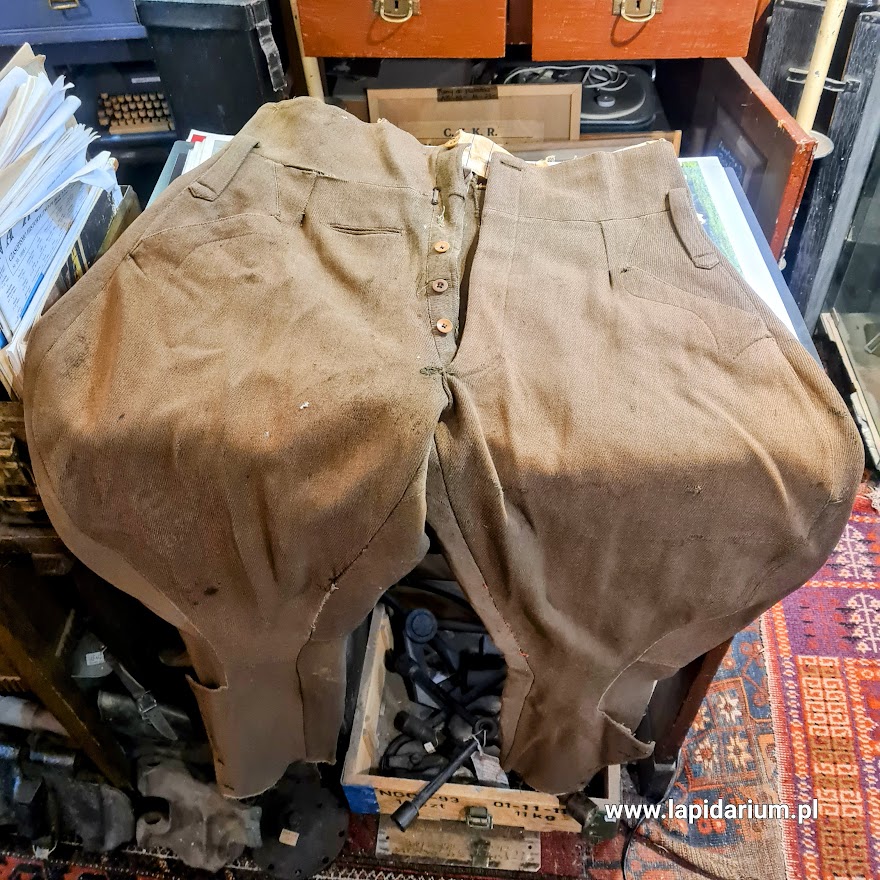
Type 3 uniform (or
San-shiki gun-i) was the standard field uniform of the Imperial Japanese Army, introduced in
1943. Its introduction was a direct result of Japan's increasingly difficult material situation in the final period of World War II. The uniform was of an
economy pattern, hence many simplifications compared to its predecessors.
Main features and changes:
-
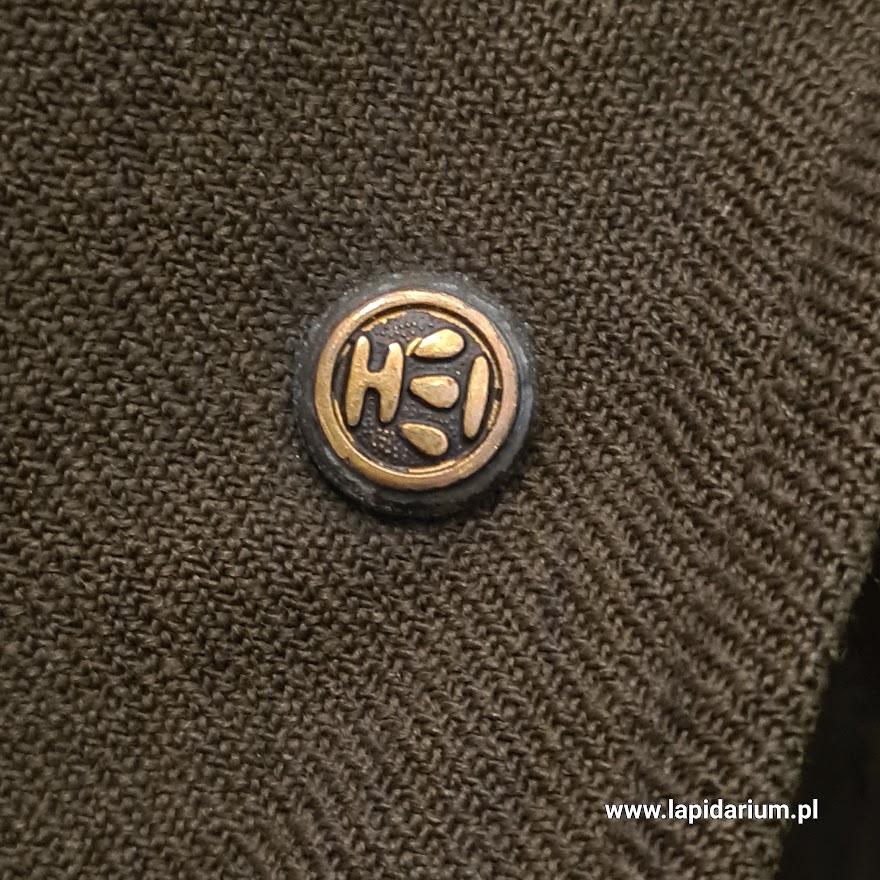
Materials: Cheaper and lower quality materials were used, such as thicker, rough wool or blends with cotton, and plastic buttons (often with a visible seam) instead of metal ones. Buttons of dark brown or wood are also common.
-
Cut and construction: The identical cut of the highly regarded, high-quality Type 98 uniform from 1938 was strictly maintained. This means it was still a single-breasted uniform, buttoned with five buttons.
-
Color scheme: It was characterized by a dark green ("bottle green") color (called shin-gun, meaning "new uniform color"), which replaced the earlier, more brownish-olive shade (koku-gun). The fabric was often of low quality, quickly faded and pilled.
-
Details:
-
It had four internal flap pockets (two on the chest, two at the waist).
-
Turn-down collar with a facing in the uniform color (in Type 98 the facing was often in a contrasting light green color).
-
Simplifications: Numerous signs of economizing are visible – less careful stitching, often no hemming of buttonholes, poorer finishing of holes for equipment straps (e.g., for the shovel). The belt support straps were often sewn directly onto the tunic, rather than sewn to the internal lining.
-
Rank insignia: Military rank patches (nori-ittōshō etc.) were embroidered on a green, not red (infantry) or other background, which was another simplification.
Evolution and significance:
The Type 3 uniform symbolizes the progressive degradation of the Imperial Japanese Army's supply. Despite retaining the elegant cut of the Type 98, its construction and materials were far from ideal. In later years of production (1944-45), quality was even lower, and uniforms were often made locally from available materials, leading to numerous variants. It was the last regulation field uniform of the Japanese army, used en masse until the surrender in 1945.
This uniform, along with the characteristic helmet, became an iconic image of the Japanese soldier during the Pacific War, associated with fanatical and stubborn resistance on the islands of the Pacific, in Burma, and China.